Horror · Supernatural · Cosmic Horror
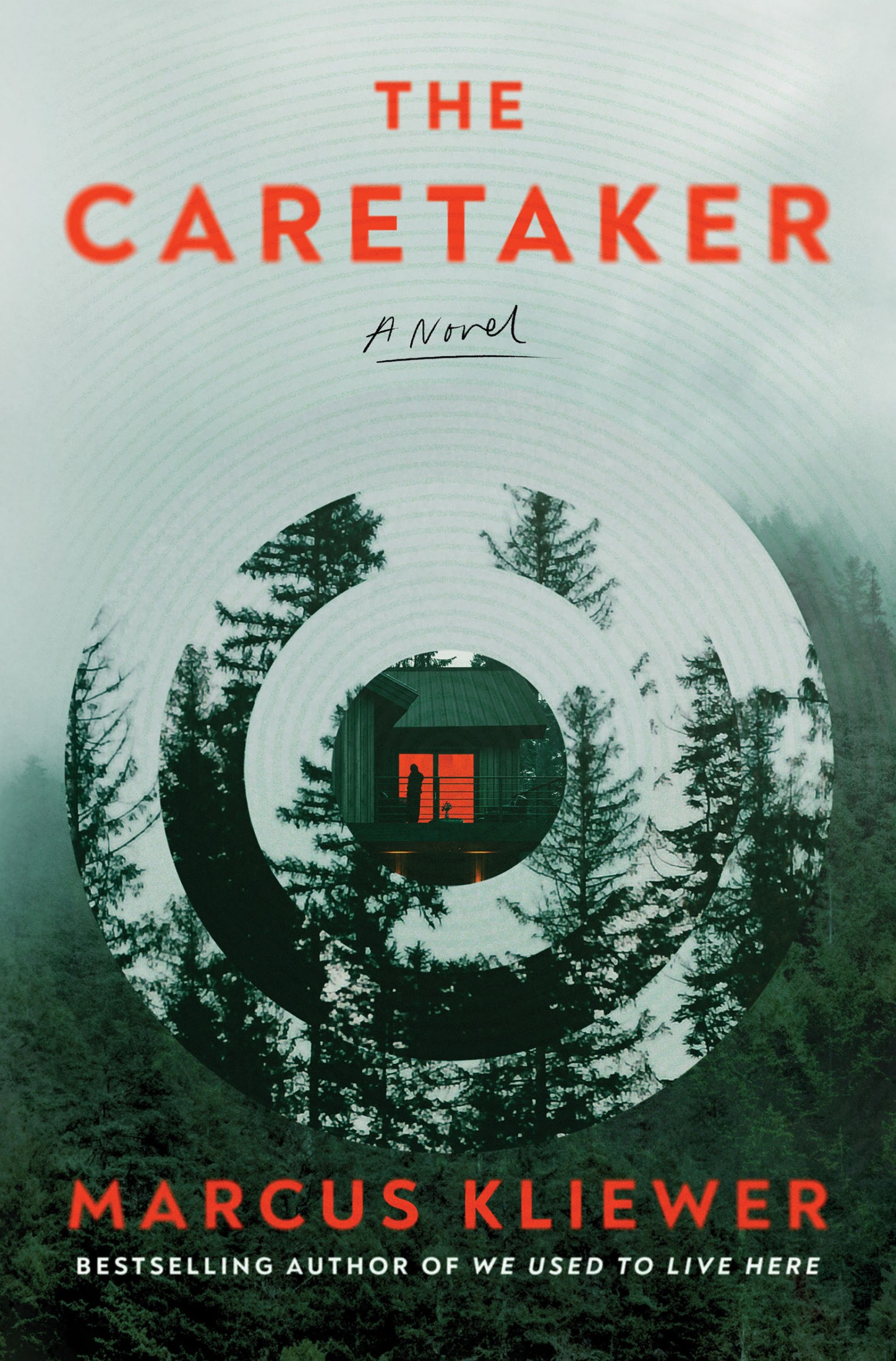
The Caretaker
Grief-soaked, genuinely strange supernatural horror that earns its $29 price tag — best read in one sitting with the lights low.
The review
The isolated house premise is one of horror's most exhausted tropes. Marcus Kliewer opens The Caretaker by admitting as much — and then immediately proves he doesn't care.
The first chapter doesn't belong to Macy Mullins, the protagonist on the cover copy. It belongs to David Carnswel, an aging man tracking muddy footprints through dark Oregon coast woods at midnight, following rules he calls the Rites to keep something incomprehensible from crossing his property line. When he finds the Visitor at trail's end — a supernatural apparition wearing the face of his dead son, with pale blue eyes where dark brown ones should be — the book announces exactly what kind of horror it is: intimate, grief-soaked, and genuinely strange. David tries to talk the Visitor down. He says the name. The Visitor tells him, quietly, that Caleb blamed him. It's a devastating opener, and it earns everything that follows.
Macy arrives shortly after. She's twenty-two, a graphic design grad with a Pikachu backpack, a mountain of debt, and a dead father whose oversized parachute jacket she still wears everywhere. She's keeping her teenage sister Jemma alive through sheer stubbornness. When a Craigslist ad for a three-day caretaking job at a Brooksview Heights estate lands in her inbox, she ignores every red flag because she cannot afford not to. Kliewer earns this setup by making her desperation feel utterly real before a single supernatural thing happens — the ChatGPT rejection emails, the long bus ride to a wealthy neighbourhood she can't even get signal in, the woman in the neon-blue rain jacket who may or may not be staring at her from the front of the bus.
The job comes with a VHS tape. David Carnswel's instructions — the Rites — are specific, non-negotiable, and deeply strange. Keep certain lights off between 3 and 4am. Visitors will always have blue eyes; do not speak to them. Never look back. The list is long, and Macy struggles to follow it precisely. Kliewer structures her failures like OCD compulsion logic: the creeping dread that you may have already made the wrong move, that one small deviation has set something terrible in motion that cannot be undone. He turns mundane objects — a light switch, a landline phone, the lime-green wand lighter above the kitchen fridge — into instruments of dread.
The middle act is where the book asks the most of you. Macy's internal loops become redundant, her decision-making frequently maddening. She's impulsive, abrasive, and catastrophically bad at following simple instructions even when she knows what's at stake. Push through anyway. Kliewer is building pressure, not stalling. The Oregon coast property — the surrounding Douglas firs, the pale thin rope at the property line, the trail down to Windfall Inlet — does enormous atmospheric work, and the visual precision of his prose (he also works as a stop-motion animator) means the house feels like a place with actual physics.
The ending does not resolve. Macy walks to the edge of Windfall Bluff at dawn — above the jagged rocks and crashing Pacific — in a moment written unmistakably as suicidal. Her phone buzzes. Her sister, alive and calling from a bus, pulls her back. The sun rises over Brooksview Heights and turns red. Humanity's fate is left deliberately unanswered. If you need a tidy resolution, this book is not for you. If you can sit with ambiguity — with the particular unease of a story that treats its own incomprehensible evil as simply weather — The Caretaker will stay with you considerably longer than a neater book would.
Who is this for?
Read this if you…
- Loved We Used to Live Here or Paul Tremblay
- Prefer slow-burn dread over jump scares
- Appreciate horror grounded in grief and mental health
- Can tolerate a flawed, maddening protagonist
- Enjoy open-ended cosmic horror conclusions
- Want something to devour in a single sitting
Skip this if you…
- Need a competent, likable protagonist
- Require everything explained by the ending
- Want a direct sequel to We Used to Live Here
- Prefer action-forward horror over psychological dread
- Find repetitive middle acts deal-breaking
Scores & the money verdict
Our call: Buy the hardcover at $29 if you are a committed horror reader — this book was written to be consumed fast, undistracted, in one night. At roughly $4 per hour of reading time, the value is strong. The ebook at ~$14.99 is the smart pick for digital readers. The audiobook is genuinely well-suited to the material — dual narrators across the David and Macy sections match the book's structure. The only reason to wait for paperback (likely ~$18, 12–18 months away) is if you're unsure whether cosmic horror with an unresolved ending is your thing — in which case, borrow from the library first.